
The Time It Takes
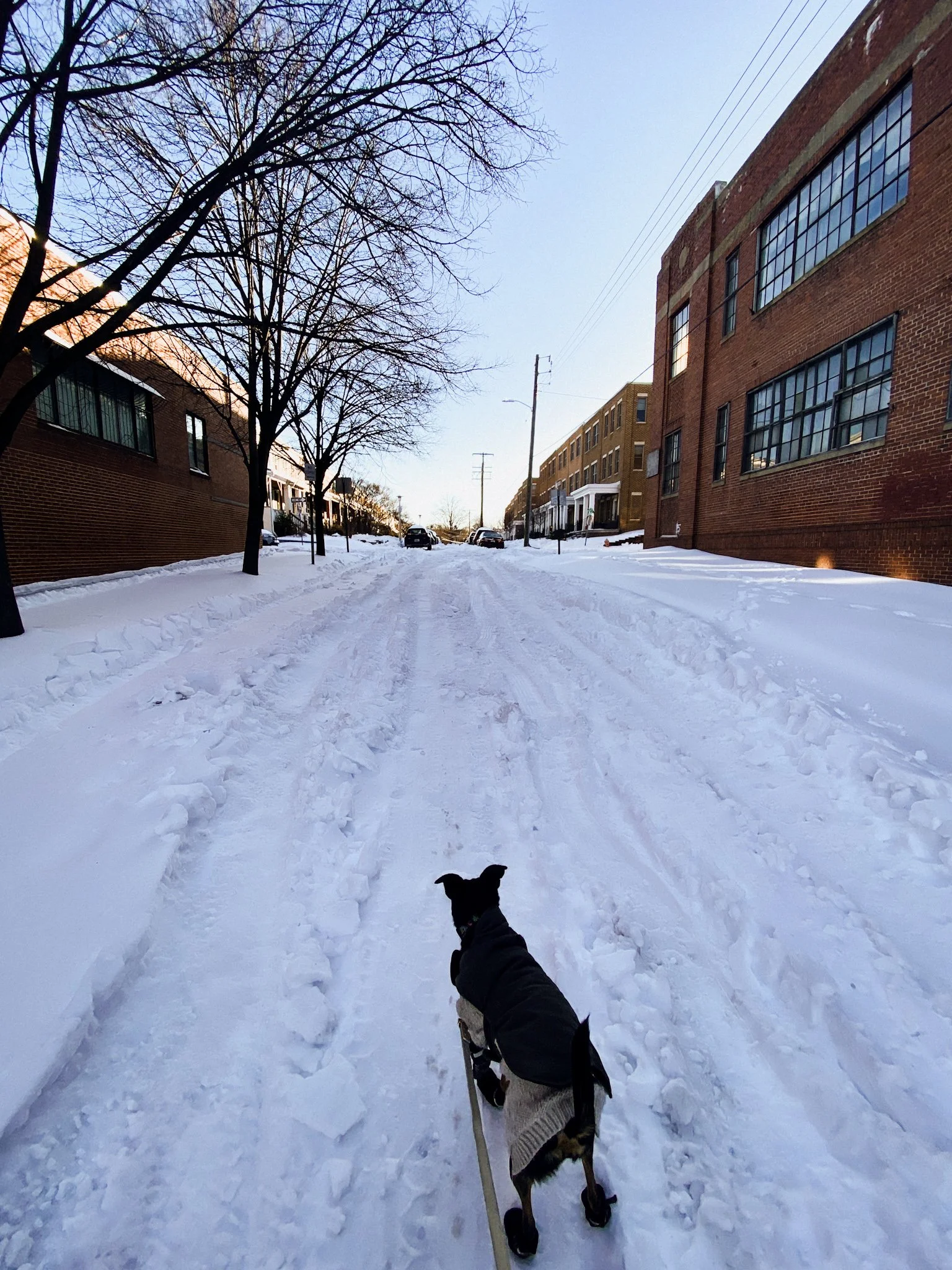
Baltimore got two feet of snow in January, and then the temperature dropped and stayed there. The snow turned to ice. The alley where we park became impassable, and the Potters Guild parking lot wasn't much better. I stayed home.
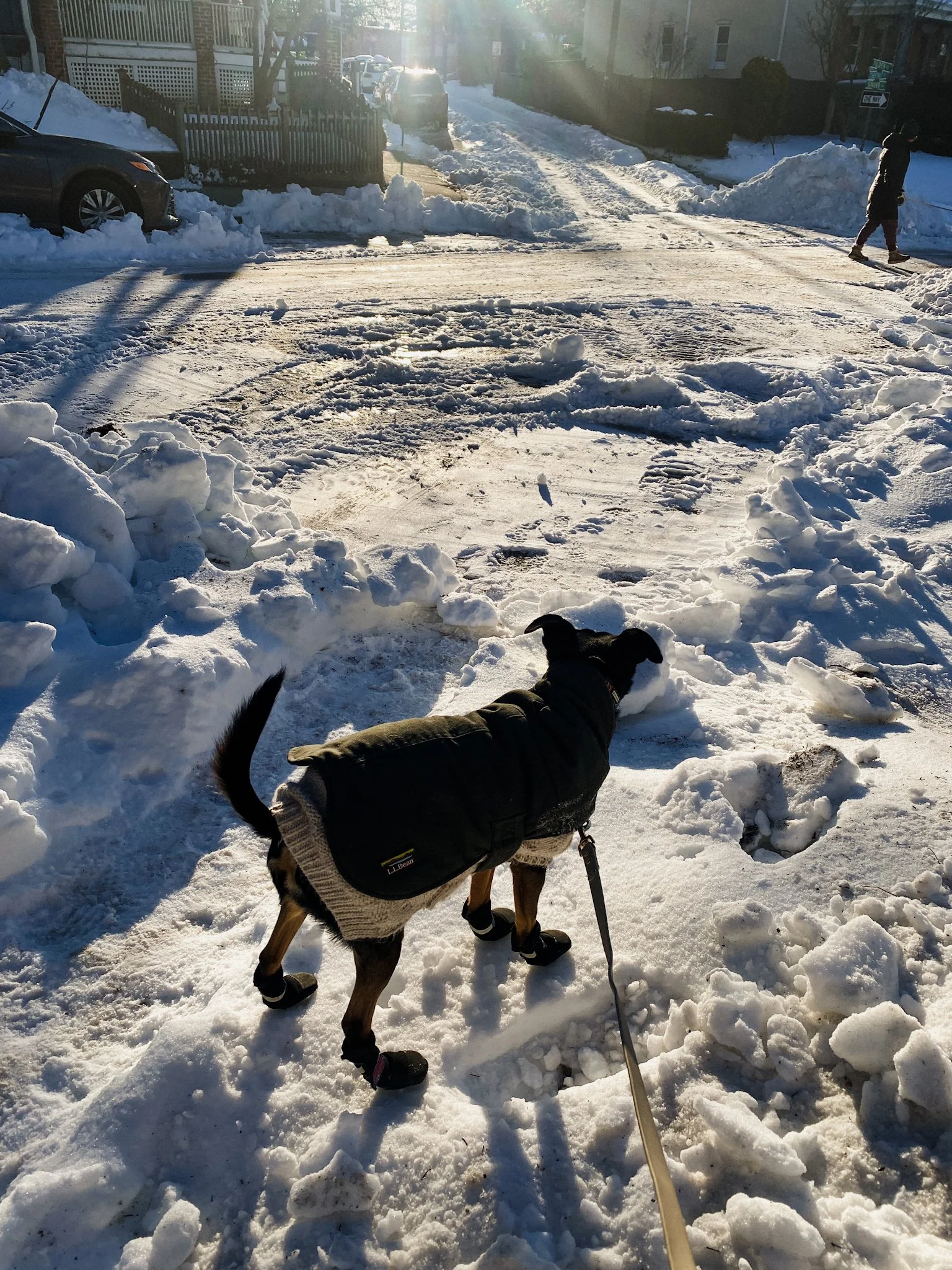
The next week, things warmed up just enough for the ice to start melting—seeping across the slanted sidewalk, refreezing overnight into something you couldn't see. I was walking Frisket when I turned a corner and went down, twisting my knee and pulling a tendon. Another week home.
I finally made it in for open studio, but spent most of it learning to pug reclaim—running old clay through the pugger until it comes out the other side as something uniform, workable again. It’s a good thing to know, but not what I'd planned.
The next week I got client revisions, so I stayed home to work on an approaching deadline. Same for this week. It's been nearly a month.
I've been thinking about time a lot lately, for obvious reasons. Making art is a balance between indulgence and efficiency. When you make art for yourself, you can take as long as you want. But once money comes in, you start weighing the time you want to take, the time the piece needs, against what you can ask for it.
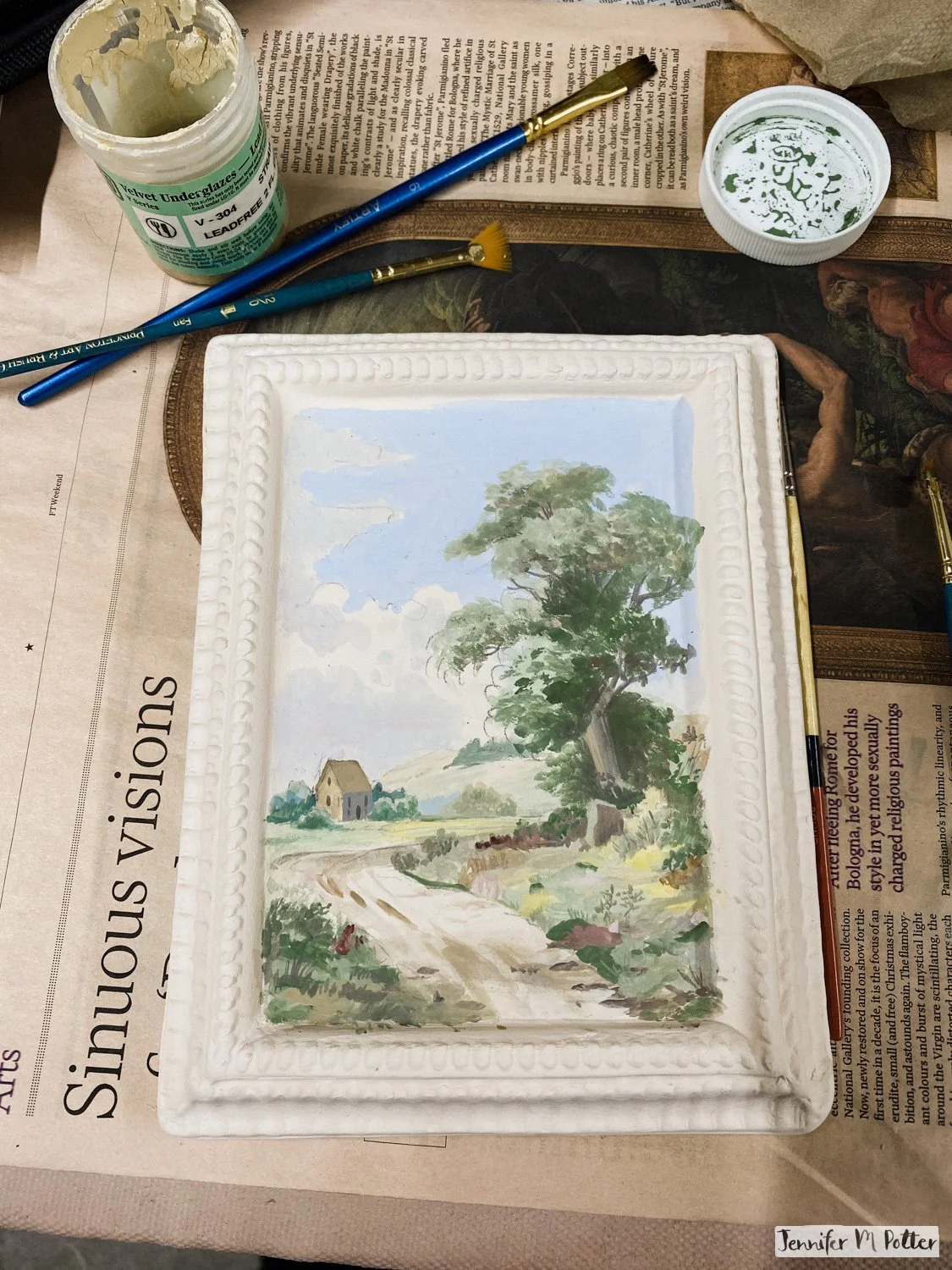
I think about this with the ceramic paintings especially. Some are indulgent—more colors mixed, more careful layering, tiny brushstrokes that hopefully won’t disappear entirely in the kiln. They're a risk every time, and the price has to reflect that. But I also want to make things that are simpler. Still beautiful, but cleaner. Fewer colors, more restraint. A more accessible price point.
The thing is, efficiency in ceramics only goes so far. It's not like illustration, where you slide out a sheet of paper, apply paint, and call it done. Each ceramic painting gets molded and sculpted, then must dry completely before the first fire. Then it's painted—sometimes over multiple sessions. Fired again. Then two different glazes, several layers of each, all painted on because the shape doesn't allow for anything faster—no quick dip and done, no two seconds in a bucket. Fired a third time. No matter how efficient I get with a brush, the forming, the firing, the glazing—it all takes the time it takes.
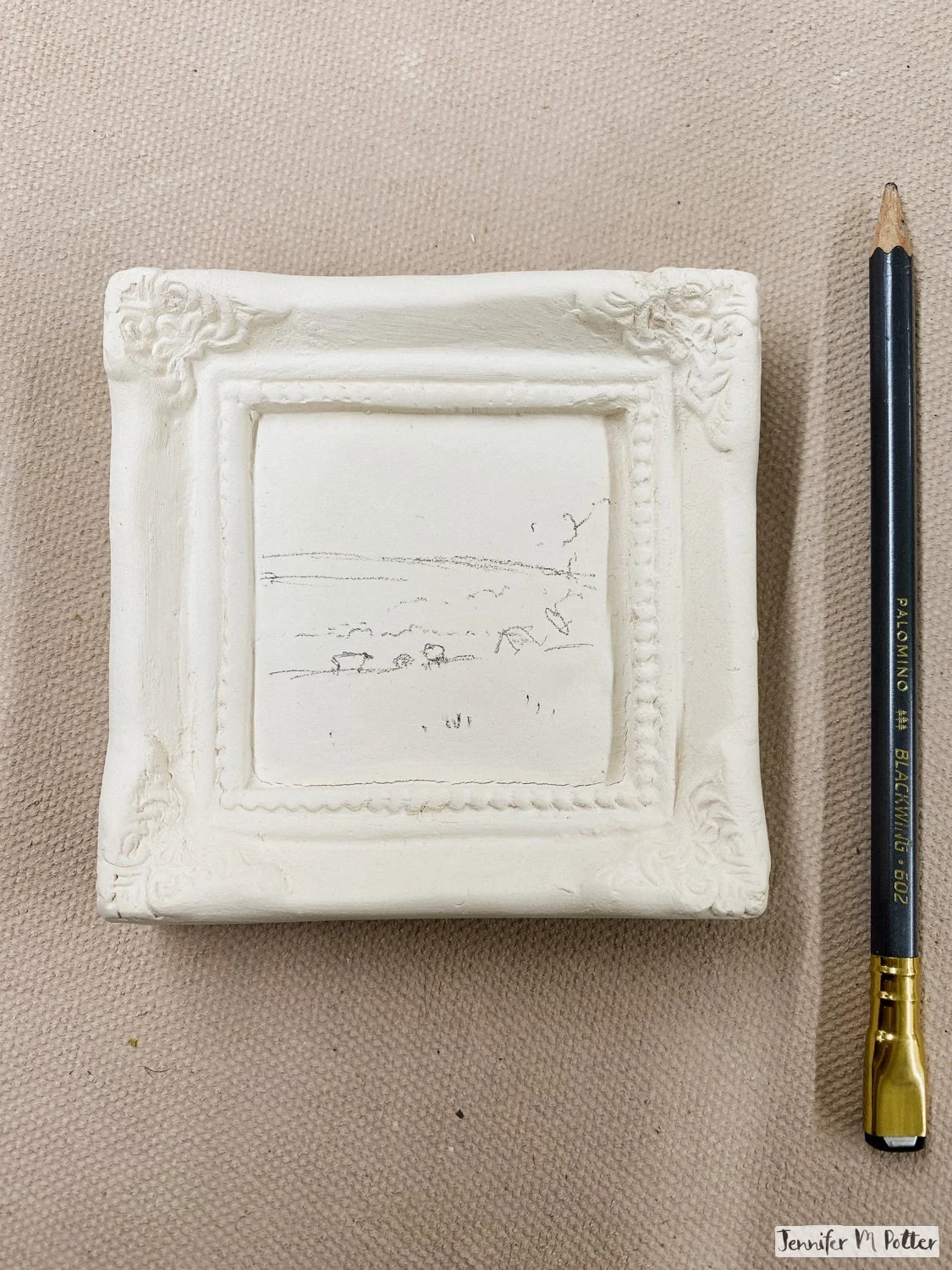
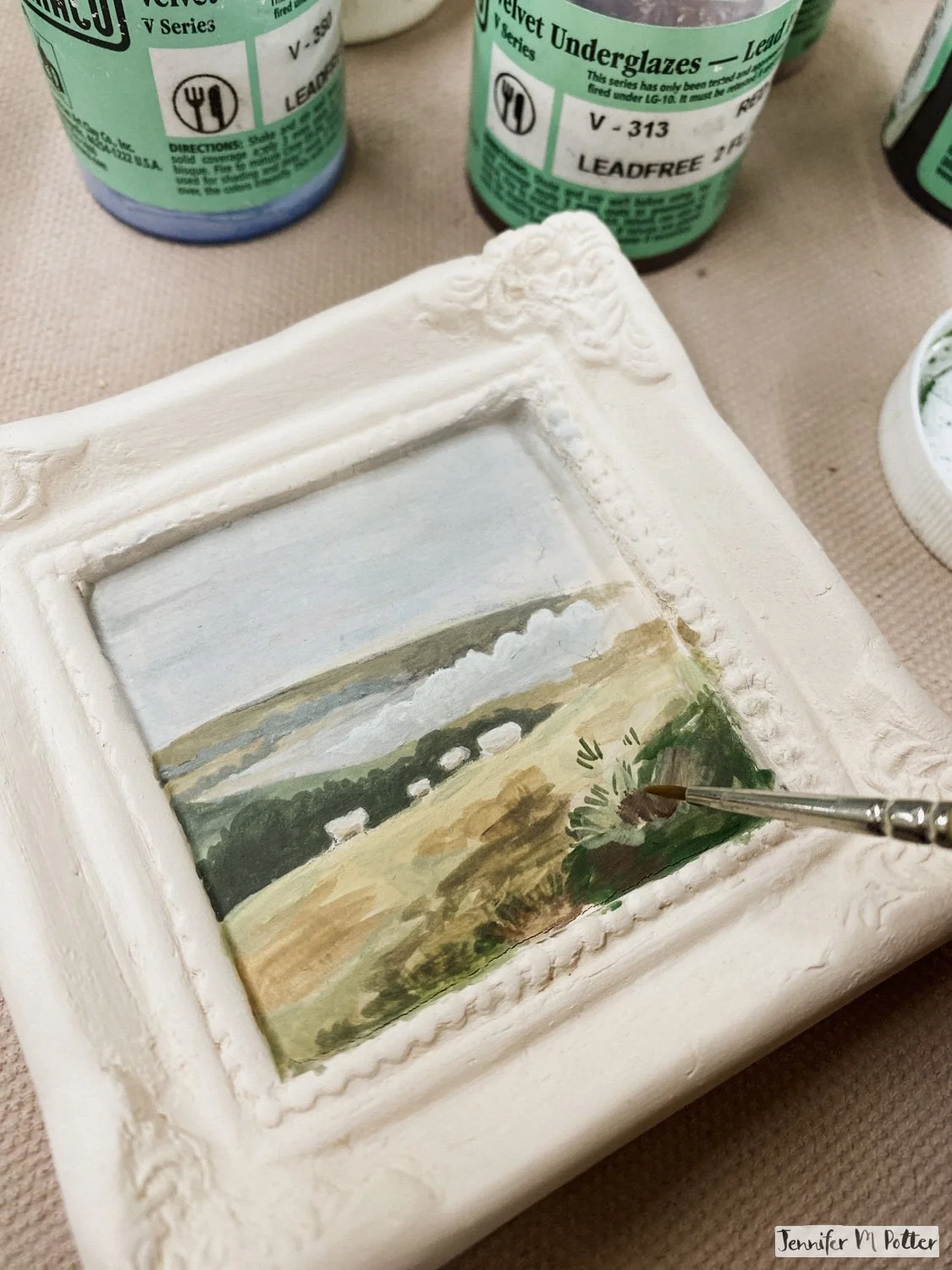
I meant to have these frames finished and fired weeks ago. Then the snow came, and then my injured knee, and then the revisions.
The ceramic frames I expected to have finished and fired by now are still waiting.
Turns out "the time it takes" includes a lot of things you can’t always account for.